You’ve published your blog posts. You’ve done your keyword research. But your site still isn’t showing up on Google. Sound familiar?
Here’s the thing — you might be missing one important piece of the puzzle: backlinks. And the good news is, getting your first ones is a lot simpler than most SEO blogs make it seem.
This guide walks you through everything from scratch. No confusing jargon. No paid tools required. Just clear, simple steps you can actually take today.
What Is Link Building and Why Should You Care?
Think of it this way. Imagine you’re new in town and you’re looking for a good restaurant. If five different people all recommend the same place, you’re going to trust it. Google works in a very similar way.
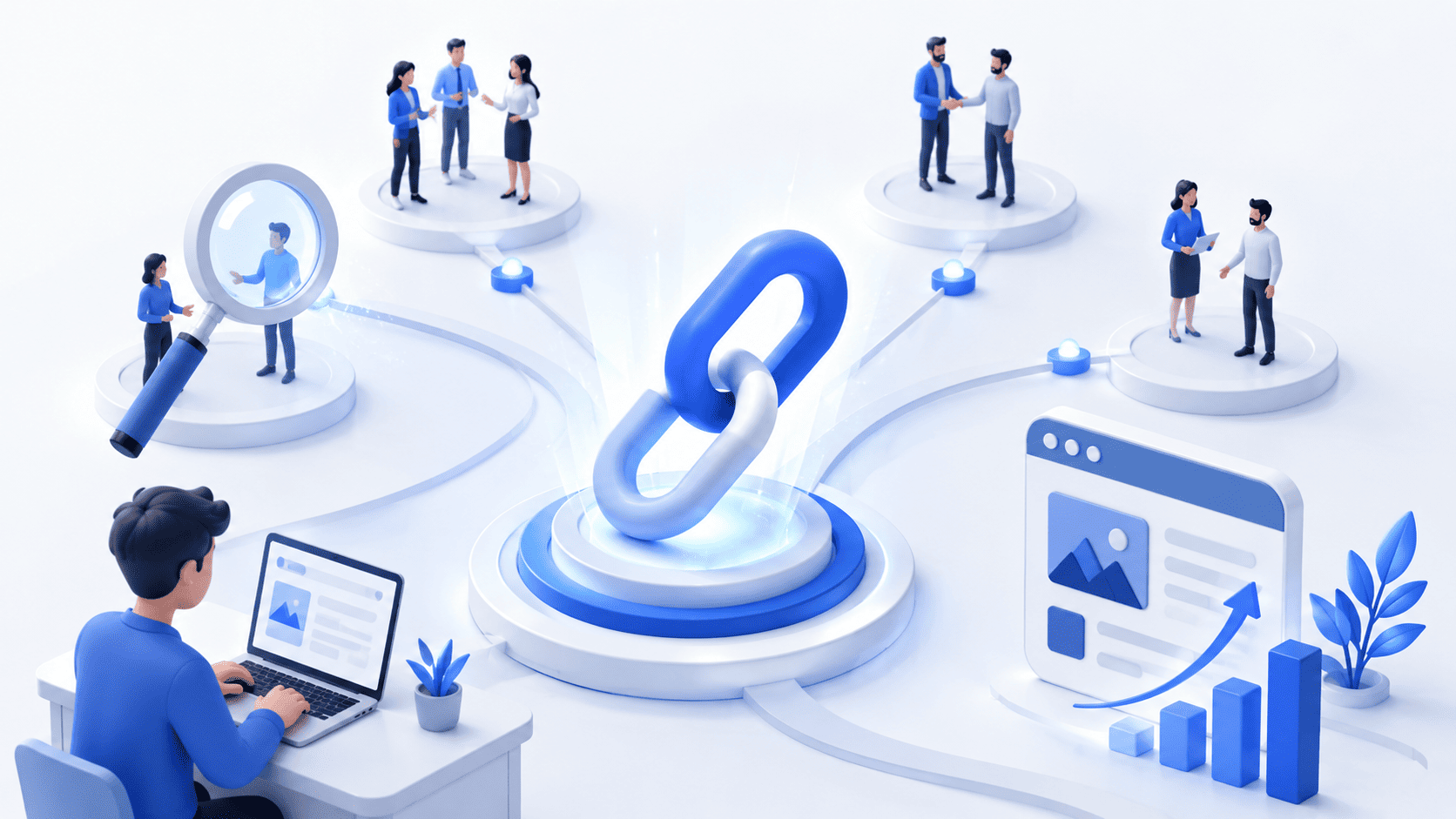
When other websites link to your blog, Google sees those links as recommendations. The more trustworthy the site linking to you, the more Google trusts your site in return.
That process of earning those links is called link building. And it’s one of the most important things you can do to help your blog rank higher in search results.
What Are Backlinks and Why Do They Matter?
| Link Building Meaning: Link building is the process of getting other websites to link back to your blog. Each link acts like a vote of trust — telling Google that your content is worth recommending. |
How Do Backlinks Actually Help You Rank?
Google uses hundreds of signals to decide which pages show up at the top of search results. Backlinks are one of the most powerful ones.
Here’s why. When a trusted website links to your blog post, Google takes notice. It thinks — if this respected site is pointing to this content, it must be useful. That trust then passes to your page, and your rankings can improve.
How Google Works (Crawl, Index, Rank)
This is why two blog posts with similar content can rank very differently. The one with more quality backlinks usually wins.
| Ranking Signal Meaning: A ranking signal is any piece of information Google uses to decide where a page should appear in search results. Backlinks are one of the strongest ranking signals Google uses. |
Are All Backlinks the Same?
Not all backlinks are equal — and this is important to understand early.
A link from a well-known blog in your niche is worth a lot. It signals to Google that a trusted voice in your space thinks your content is worth sharing. That kind of link can give your rankings a real boost.
On the other hand, a link from a spammy website or a random link directory does very little — and in some cases, it can actually hurt your site.
Don’t worry about chasing hundreds of backlinks. Focus on getting a small number of good ones from real, relevant websites. That’s always the better strategy.
| Backlink Quality Meaning: Backlink quality refers to how trustworthy and relevant the site linking to you is. A link from a respected, relevant website is far more valuable than a link from a random or spammy site. |
How Many Backlinks Do You Need to Start Ranking?
This is one of the most common questions beginners ask — and the answer might surprise you.
You don’t need hundreds of backlinks to start seeing results. For a brand new blog targeting low-competition keywords, even five to ten quality backlinks can make a meaningful difference.
The key is consistency, not speed. Focus on earning a few good backlinks every month. Over time, your link profile grows, your trust with Google grows, and your rankings follow.
Don’t try to rush it. Slow and steady really does win this race.
| Link Profile Meaning: Your link profile is the full collection of backlinks pointing to your website. Google looks at your link profile to understand how trusted and established your site is. |
What Are the Easiest Ways to Get Your First Backlinks?
Here are five beginner-friendly tactics that actually work. Pick one and start there.
Write Guest Posts for Other Blogs
Find a blog in your niche that accepts guest contributions. Write a helpful article for them. In exchange, you usually get to include one link back to your own blog.
It takes a little effort upfront, but a single guest post on a good blog can send both traffic and trust your way.
Answer Questions in Online Communities
Forums and community platforms are full of people asking questions in your niche. Answer those questions genuinely and helpfully. Where it’s relevant and allowed, include a link to one of your blog posts for more detail.
Don’t spam links — only share them when they genuinely add value to the conversation.
Create Something Worth Linking To
This one is simple but powerful. Write a blog post that is genuinely more useful than anything else out there on that topic. A detailed beginner guide, a free checklist, or a clear comparison — these naturally attract links because other bloggers want to point their readers to helpful resources.
How to Write a Blog Post That Ranks on Google
Reach Out to Other Bloggers
Find bloggers in your niche who have linked to similar content. Send them a short, friendly message introducing your post and asking if it might be useful to their readers. Keep it simple. Keep it genuine. Most people appreciate a polite outreach.
Get Listed in Blog Directories
Some directories and resource pages specifically list blogs in certain niches. Getting listed in a few good ones can earn you some early, easy backlinks. Make sure the directory is genuine and relevant — skip anything that looks spammy.
| Guest Post Meaning: A guest post is an article you write for someone else’s blog. In return, that blog usually includes a link back to your website — giving you a backlink. |
What Is Guest Posting and How Do You Do It as a Beginner?
Guest posting sounds intimidating at first. But the process is very straightforward once you break it down.
Step 1 — Find the Right Blog
Look for blogs in your niche that publish content regularly and have a real audience. Search for terms like “write for us” or “guest post guidelines” combined with your niche topic. This will show you blogs that are actively looking for contributors.
Step 2 — Send a Simple Pitch
Write a short email introducing yourself. Keep it to three or four sentences. Mention that you read their blog, share one or two topic ideas that would suit their audience, and ask if they’d be open to a guest post.
Don’t overthink this. A simple, genuine email works far better than a long formal pitch.
Step 3 — Write a Helpful Article
Once they say yes, write the best article you can. Focus on genuinely helping their readers — not on promoting yourself. Include one natural link back to a relevant post on your own blog, placed where it actually adds value for the reader.
That’s your backlink. Simple as that.
| Guest Posting Meaning: Guest posting means writing and publishing an article on another person’s blog or website. It’s one of the most effective and beginner-friendly ways to earn a quality backlink. |
How Do You Know If Your Backlinks Are Working?
Tracking your backlinks doesn’t require any paid tools. Google Search Console does the job perfectly — and it’s completely free.
Here’s how to check your backlinks inside Google Search Console:
- Log in to your Google Search Console account
- Click on your website property
- In the left menu, scroll down and click “Links”
- Under “External Links,” you’ll see which websites are linking to your blog
This section shows you the total number of backlinks, the pages on your site that have the most links, and which external sites are linking to you most often.
Check this section once a month. Watch it grow over time. That’s all you need to do at the beginning.
| Google Search Console Meaning: Google Search Console is a free tool from Google that shows you how your website is performing in search results. It also shows you which websites are linking to your blog. |
What Should You Avoid When Building Links?
A quick word of warning before you start. There are some link building shortcuts out there that seem tempting — but they can seriously damage your site.
Buying backlinks is one of the most common ones. Someone promises you 100 backlinks for a small fee. Avoid this completely. Google can detect unnatural link patterns, and a penalty from Google can wipe your rankings overnight.
Link farms are networks of fake websites created purely to exchange links with each other. These provide zero real value and Google ignores — or penalizes — sites connected to them.
Spammy comment links means leaving links in the comments section of random blog posts just to get a backlink. This used to work. It hasn’t worked in a long time, and it makes you look unprofessional.
Stick to the honest methods covered in this guide. They take a little longer, but they build something that actually lasts.
| Black-Hat SEO Meaning: Black-hat SEO refers to tactics that try to trick or manipulate Google’s ranking system. These tactics often work briefly but can result in Google penalizing or removing your site from search results entirely. |
Important FAQs
How long does it take for backlinks to affect rankings?
It varies. Some backlinks start showing results within a few weeks. Others take two to three months. Patience is part of the process — keep building links steadily and the results will come.
Can I build backlinks for free?
Absolutely. Every method in this guide is completely free. Guest posting, community participation, creating helpful content, and reaching out to bloggers all cost nothing but your time.
Is it okay to ask other bloggers for a backlink?
Yes — as long as you do it politely and genuinely. Don’t send copy-paste spam emails. Write a real message, show that you’ve actually read their content, and only ask when you have something genuinely useful to offer their audience.
What is a do-follow vs no-follow backlink?
A do-follow backlink passes trust from one site to another — this is the kind that helps your rankings. A no-follow backlink includes a tag that tells Google not to pass that trust. Most guest post links are do-follow. Most social media and forum links are no-follow. Both types have value, but do-follow links are more powerful for SEO.
Do social media links count as backlinks?
Social media links are almost always no-follow, which means they don’t directly boost your rankings the way a do-follow backlink does. They can still drive real traffic to your blog though — and more traffic means more chances of earning real backlinks from other bloggers who discover your content.
How many backlinks do I need before I start seeing results?
There’s no magic number. For low-competition keywords, even five to ten quality backlinks can make a visible difference. Focus on quality over quantity — always.
Now It’s Your Turn — Take Your First Step Today
Link building doesn’t have to feel overwhelming. Pick just one tactic from this guide — whether that’s writing a guest post, answering questions in a community, or reaching out to one blogger — and try it this week.
That’s all it takes to start. One link at a time.
And while you’re building those first backlinks, make sure your on-page SEO is solid too. Strong backlinks and well-optimised pages work together — one without the other leaves results on the table.
On-Page SEO for Beginners (Titles, Meta, Headers, Internal Links)
What is SEO? — understand the full picture of what SEO is
Google Search Console — official tool to track your backlinks for free