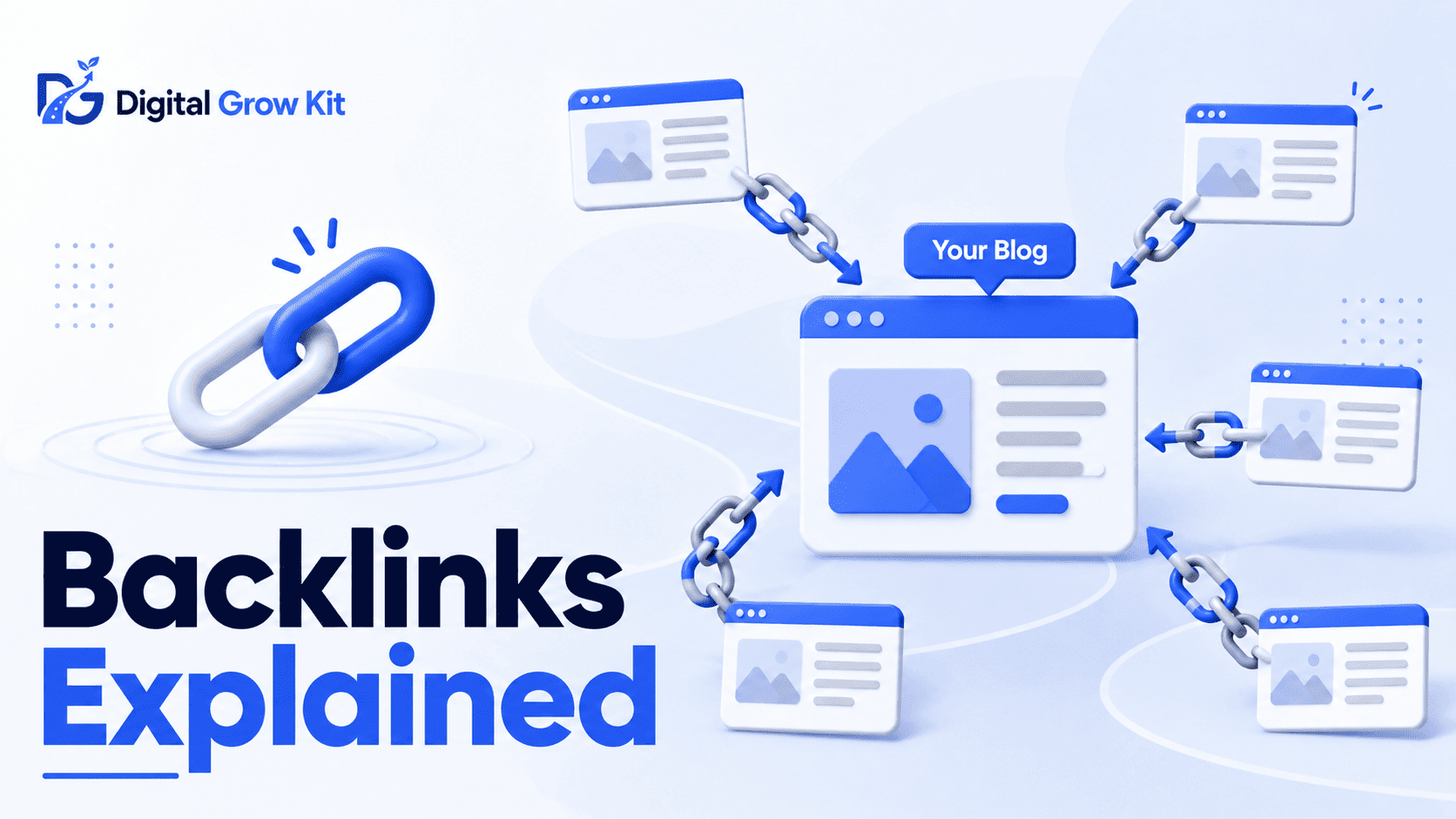
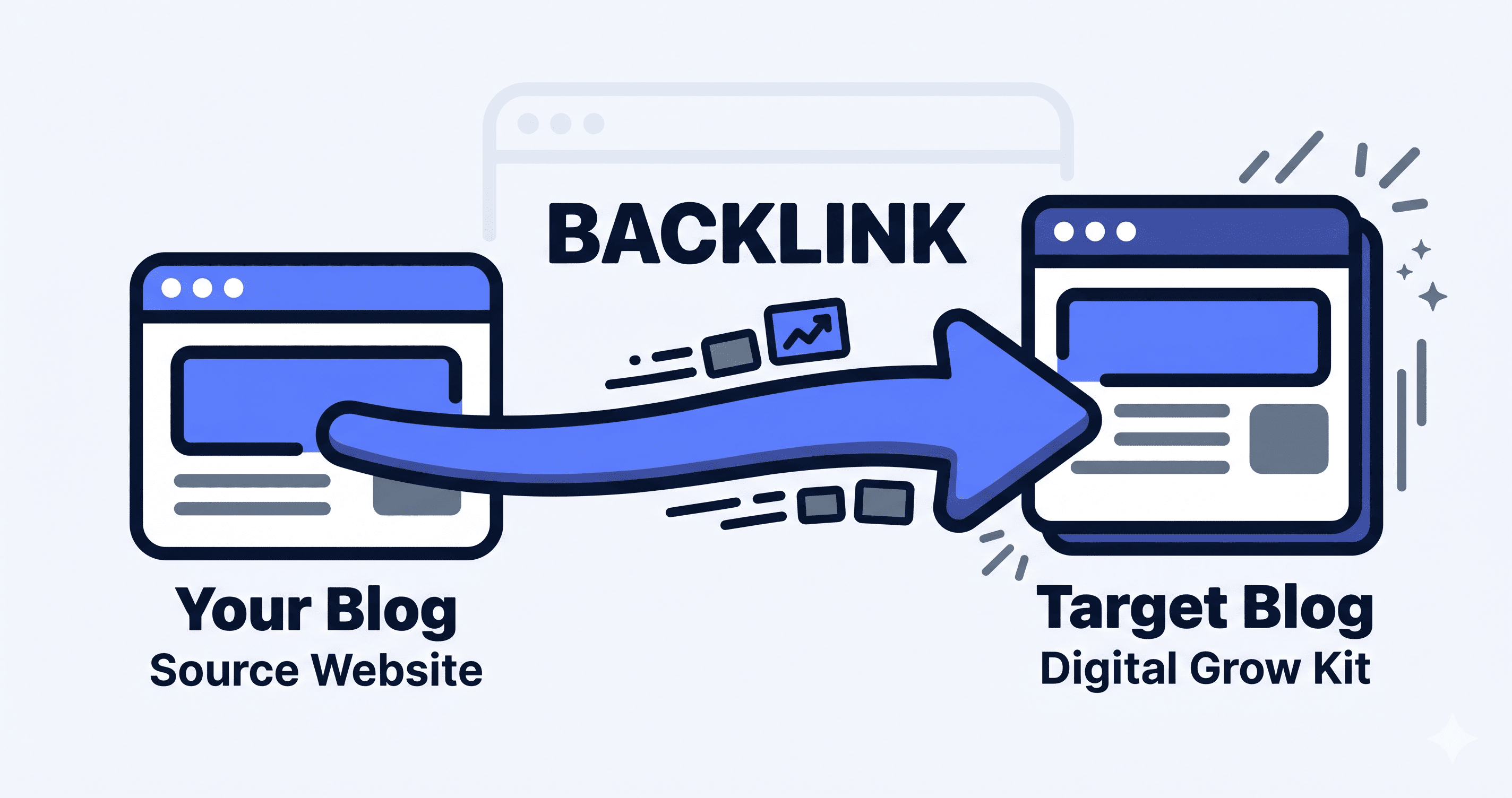
A backlink is a link from one website that points to another. When another site links to your blog, that link is called a backlink.
If you’ve ever read an SEO guide that threw around “domain authority” and “link juice” like you already knew what they meant — this one starts from zero. Here’s what backlinks actually are, how they work, and what a beginner can realistically do to earn them.
What Is a Backlink?
| Term | Meaning |
| Backlink | A link from one website that points to another website. |
Picture this. A friend tells a group chat, “This restaurant is amazing, try it.”
That recommendation carries weight because a real person vouched for it.
Backlinks work the same way, just on the internet.
When another website links to your blog, it’s saying, “This is worth reading.”
Search engines pay attention to that.
For example, a food blogger writing about morning routines might link to a coffee blog’s brewing guide. That link tells search engines the guide is useful enough to recommend.
How Do Backlinks Work?
Search engines use automated programs called bots to travel across the internet. These bots move from page to page by following links — a process called crawling.
When a bot finds a backlink pointing to your blog, two things happen. It may follow that link and discover your blog for the first time. It also registers that another site has linked to yours.
That second part matters. A backlink isn’t an automatic “point” that mechanically boosts a ranking. It’s one piece of evidence, among many, that a page might be worth showing to searchers.
A link from a well-established, relevant site carries real weight. A link from a brand-new or unrelated site barely registers.
Why Do Backlinks Matter for SEO?
| Term | Meaning |
| SEO | Search engine optimization — the process of improving a website so it ranks higher in search results. |
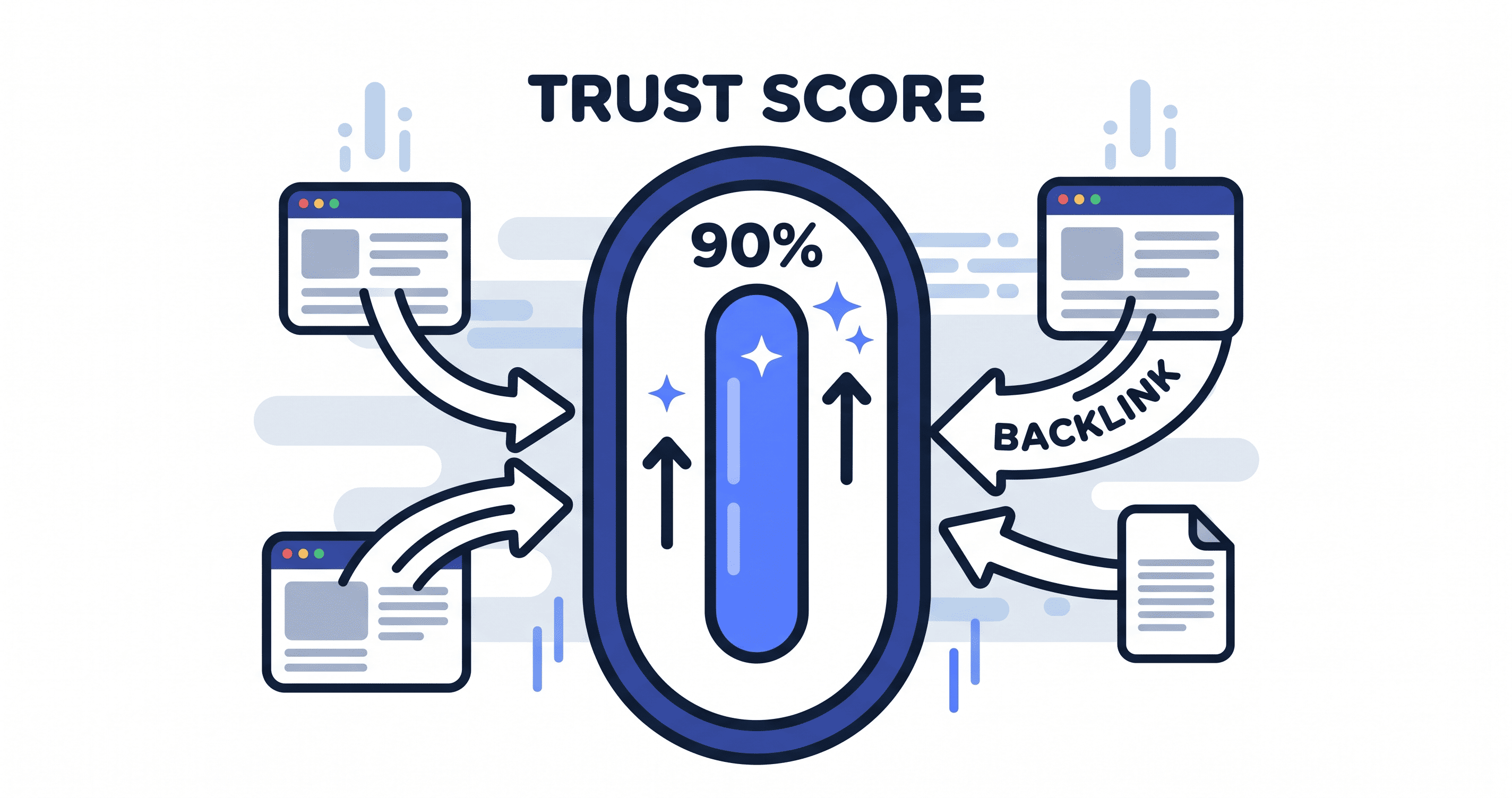
A search engine can’t personally visit every website and judge which one is best. So it relies on signals instead. Backlinks are one of the strongest signals it uses.
Here’s why they matter:
- Discovery — bots find new pages by following links.
- Relevance — a link from a related site tells search engines your content fits that topic.
- Trust — links from reputable sites act like a vouching system.
- Referral traffic — people actually click backlinks, sending real visitors your way.
This matters most for new blogs. A brand-new site has no track record yet. Each backlink from a reputable source is one more piece of evidence that your content deserves attention.
This doesn’t happen overnight. It builds steadily for blogs that publish helpful content and slowly earn links elsewhere — the same process covered in how domain authority builds over time.
One honest point worth making: more high-quality backlinks generally means better visibility. But backlinks alone don’t guarantee a specific ranking. They work alongside content quality and relevance, not instead of them. You can see how this fits the bigger picture in what SEO actually is and how it works.
Types of Backlinks
| Term | Meaning |
| Dofollow link | A standard link that can pass ranking value from one site to another. |
A few categories are worth knowing:
- Dofollow links — standard links that can pass ranking value. This is the default unless a site marks a link otherwise.
- Nofollow links — these carry a tag telling search engines not to pass ranking value through them. They show up often on social media and forums. They won’t boost rankings the same way, but they can still send real visitors your way.
- Editorial links — these happen naturally, when someone finds your content useful and links to it on their own. They tend to carry real weight.
- Manually built links — these come from active effort, like guest posts or directory listings. They still count, but usually take more work.
A healthy backlink profile has a mix of all four, built up gradually.
What Makes a Good Backlink?
A few factors decide how much a backlink actually helps:
- Relevance — a link from a related site matters more than one from something unconnected.
- Trustworthiness — a link from an established, credible site carries far more weight.
- Context — a link placed naturally inside relevant content beats one dropped into a random list.
- Usefulness to readers — if the link genuinely helps someone, that’s usually a strong sign.
The goal is never the highest number of backlinks possible. A few relevant, trusted links usually beats dozens of random ones.
What Makes a Bad or Risky Backlink?
Some backlinks can do more harm than good:
- Spammy links — from low-quality sites built purely to manipulate rankings.
- Irrelevant links — from sites with no real connection to your topic.
- Manipulative link schemes — paid link networks or automated link exchanges.
- Unnatural patterns — a sudden flood of links with identical anchor text.
Search engines are generally good at spotting these patterns. That said, one stray low-quality link rarely causes a penalty on its own — search engines mostly just discount it. Still, it’s not worth chasing these kinds of links.
Backlinks vs Internal Links
This is one of the most common beginner questions, and a fair one.
| Internal Link | Backlink | |
| Connects | Two pages on your own site | Two different websites |
| Main job | Helps readers and search engines navigate your content | Signals trust from an outside source |
| Who controls it | You | Another site owner |
| Effect | Improves how your content connects | Builds authority, can drive referral traffic |
Neither replaces the other. Internal links help search engines understand your content, as covered in on-page SEO for beginners. Backlinks show how trusted your site is compared to others. A solid strategy uses both.
How Do I Check My Backlinks?
| Term | Meaning |
| Google Search Console | A free Google tool showing how your site performs in search, including who links to it. |
The most reliable free way to check your backlinks is Google Search Console.
- Log in to Google Search Console for your site.
- Open the Links section in the sidebar.
- Check External Links for your top linking sites and top linked pages.
This data comes straight from Google, so it’s the most accurate source you’ll find.
Free backlink checker tools can also give you a rough sense of what competitors are doing. They won’t match a paid tool, but they’re often enough to spot who’s linking to similar content.
How Can a Beginner Get Backlinks?
| Term | Meaning |
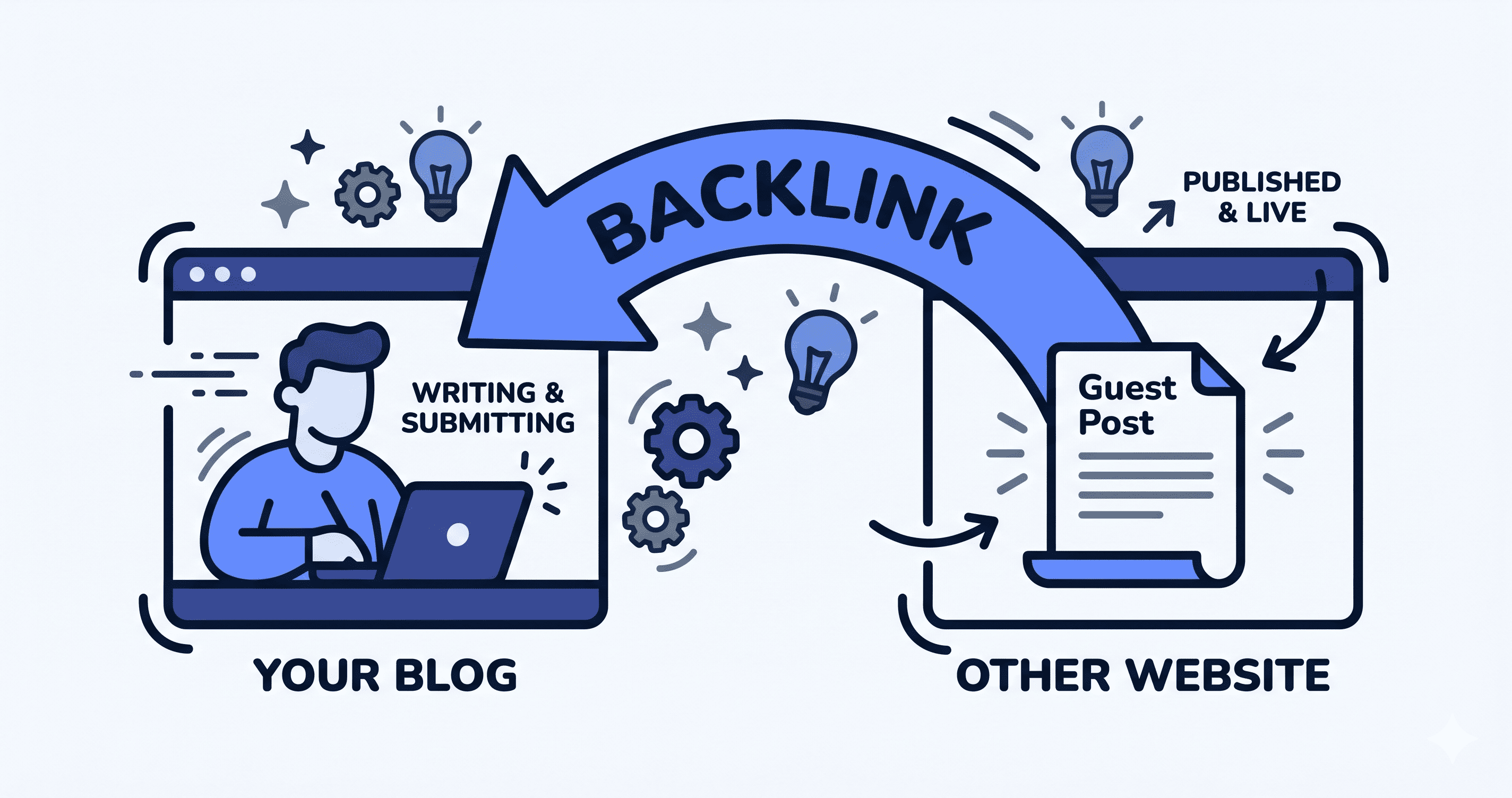
| Guest post | An article written for someone else’s site, usually in exchange for a link back to your own. |
Getting backlinks takes time. There’s no shortcut around that. But there are real, beginner-friendly ways to start.
Write Content Worth Linking To
The most reliable way to earn backlinks is to publish content that genuinely helps people. When site owners find a post useful, they naturally want to link to it.
Focus on detailed, beginner-friendly guides that answer real questions. Clear structure — the kind covered in what content SEO actually involves — makes your content easier to reference.
Try Guest Posting
Guest posting means writing an article for another blog in a related niche. In return, you usually get a link back in the post or your author bio.
This is one of the more accessible ways to build backlinks early on. Start small — look for blogs that accept contributions.
Get Listed in Relevant Directories
Some directories are legitimate and well-maintained. A listing in a good one can earn a backlink and drive referral traffic at once.
Avoid directories that list every website with no standards. Search engines can flag those as spammy.
Reach Out to Other Site Owners
If a blogger has written about a related topic, a polite message letting them know your resource exists can go a long way. Link building for beginners and what off-page SEO involves cover this in more depth.
The key word is genuinely. Don’t beg for a link. Make the content known, and let it earn links on its own.
How Many Backlinks Do I Need to Rank?
There’s no fixed number. Anyone promising an exact figure is guessing.
Ranking depends on several things together:
- How competitive your target keyword is
- How well your content matches search intent
- Overall content quality and depth
- How relevant your linking sites are
- Your site’s overall strength and trust
- Technical factors like speed and mobile-friendliness
A low-competition topic might only need a handful of relevant backlinks. A competitive one might need much more, plus strong content behind it. Backlinks are one input, not the whole formula.
Frequently Asked Questions
What is a backlink in simple words?
A link from another website that points to yours. Search engines use it as one signal, among several, when judging a page.
What is a nofollow backlink?
A backlink with a tag telling search engines not to pass ranking value through it. It can still send real visitors your way. See dofollow versus nofollow explained.
Do backlinks from social media count?
Social links are almost always nofollow, so they don’t pass ranking value the same way. But people often discover shared content and link to it from their own sites.
How long do backlinks take to affect rankings?
It varies. Some show an effect within weeks; others take months. Keep publishing helpful content and let backlinks build naturally.
Can I buy backlinks?
Buying backlinks breaks search engine guidelines. Search engines look for unnatural patterns and can take action against sites that try this. It’s rarely worth the risk for a newer blog.
What Should You Do Next?
Start simple. Check Google Search Console to see if your blog has any backlinks yet. If it isn’t set up, that’s your first task — it takes a few minutes.
From there, focus on what matters most: publishing genuinely helpful content. Backlinks tend to follow good content, not the other way around.
Every blog starts at zero. That’s normal. Keep writing, keep publishing, and backlinks will follow.