A blog is a section of a website that publishes posts in reverse order — newest first. Some people call it an online blog or a blog site. They all mean the same thing.
That sounds simple. But the confusion usually starts somewhere else: people use “blog” and “website” like they’re interchangeable. They’re not.
This post clears that up in a few minutes. No jargon, no fluff.
What Exactly Is a Blog?
In plain terms, a blog is an ongoing collection of posts, not a single page. That’s the whole idea.
| Term | Meaning |
| Blog | A blog is a section of content that publishes posts or articles in reverse chronological order — meaning the newest post always shows up first. |
That reverse chronological order isn’t a small detail — it’s actually the one thing that separates a blog from almost every other type of page on the internet. A static page sits still. A blog keeps moving.
Think of a blog as an ongoing conversation, not a one-time announcement. New posts join the collection over time, and older ones stay archived so people can still find them later.
The word itself comes from “web log,” which originally described an online journal. That meaning has grown a lot since then. Today, a blog can teach, build authority, answer questions, or share expertise.
What makes a blog different from a single article is the pattern behind it. It’s not one page sitting alone. It’s a growing collection of posts, usually built around a topic the writer knows well.
How Is a Blog Different From a Website?
| Term | Meaning |
| Website | A website is the full online space a business or person owns, which can include many different types of pages beyond just a blog. |
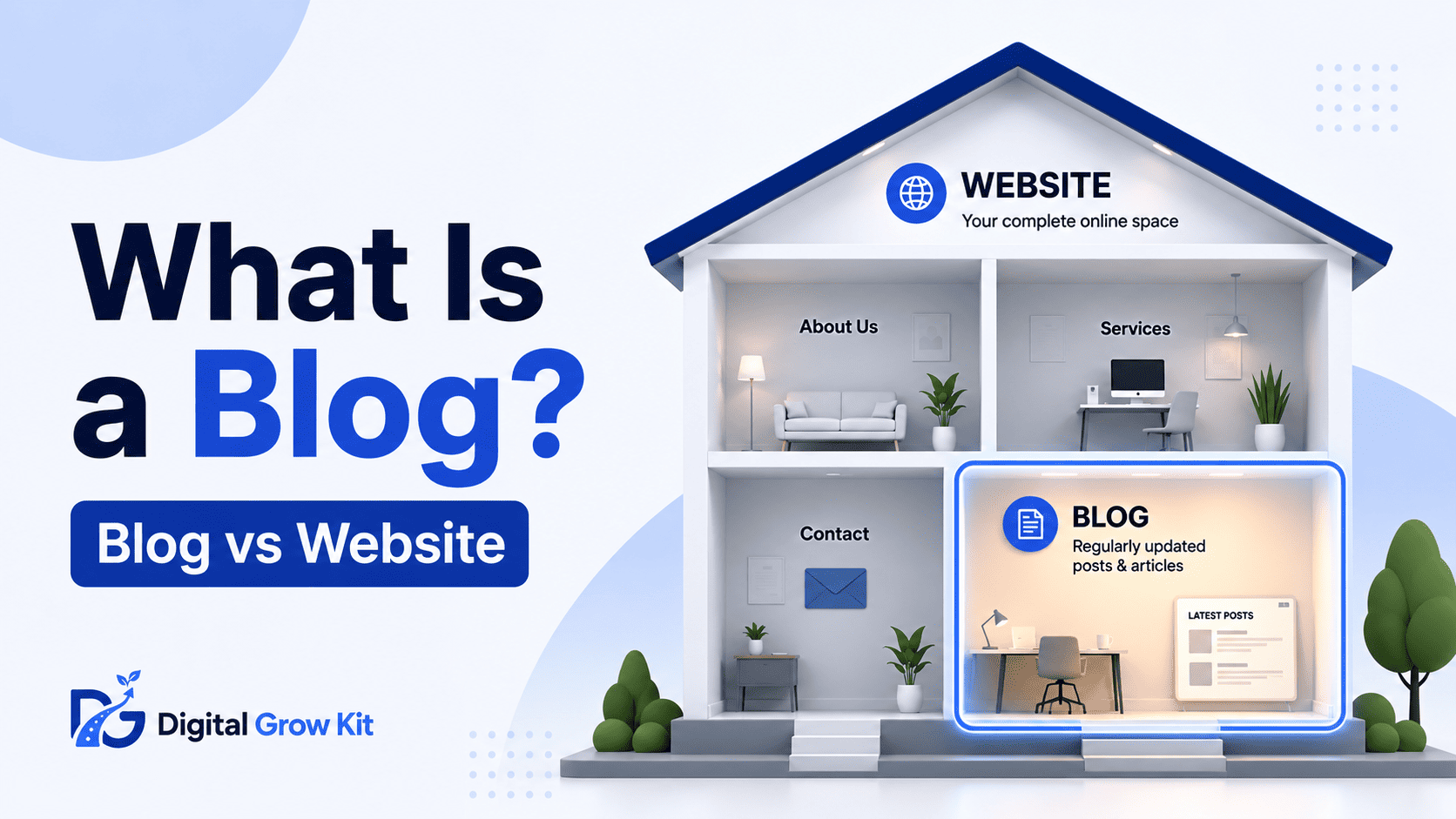
Here’s the thing — a blog is usually part of a website, not something separate from it. A website can include a homepage, an about page, a contact page, a services page, and yes, a blog too.
The blog is just one section of that bigger website. It’s the part that keeps gaining new content, while other pages like “About” or “Contact” usually stay the same for months or years.
So what does that mean in practice? A website is the whole house. The blog is one room inside it — the room that keeps changing while the rest of the house mostly stays the same.
This is also where things connect to search engine optimization, which helps people actually find that content on Google. Understanding what search engine optimization means makes it easier to see why blogs are built the way they are.
What Does a Blog Actually Look Like?
A blog isn’t just a stream of text. A few simple building blocks show up again and again, and knowing them makes everything else easier to understand.
| Element | What It Does |
| Categories | Broad topic groups that organize posts, so readers can find everything related to one subject in one place |
| Tags | More specific keywords that label a post, working alongside categories for finer organization |
| Comments Section | A space where readers can respond to posts, ask questions, or share their own thoughts |
| Header & Footer | The top and bottom of the page — usually holding the blog’s title, navigation, and contact or legal details |
This is also where blogs differ from regular website pages in a practical way. A website’s static pages don’t usually need categories or tags — there’s nothing to sort. A blog does, simply because it holds more than one post.
None of this needs memorizing. It’s just useful to recognize when setting one up later.
What Are the Different Types of Blogs?
| Term | Meaning |
| Blog Niche | A blog niche is the specific topic or theme a blog focuses on, like fitness coaching, financial advice, or freelance consulting. |
Not every blog looks the same, and that’s a good thing. A few common types show up again and again.
A personal blog shares someone’s thoughts, experiences, or hobbies without a strict business goal. A business blog supports a company’s products or services with helpful content. A niche blog focuses tightly on one topic — for example, a personal trainer writing about strength training for beginners, or a consultant breaking down common client mistakes. A hybrid blog mixes personal insight with professional goals, which is common among people building a reputation around their own name and expertise.
None of these types beats the others. The right one depends on the goal behind the blog. If picking one feels tricky, choosing the right niche is worth reading next.
Why Do Working Professionals Start Blogs?
| Term | Meaning |
| Credibility | Credibility is the trust an audience places in someone based on the quality and consistency of what they share. |
People start blogs for a mix of reasons, and most of them fall into a few common buckets.
For a working professional, the biggest reason usually isn’t hobby writing — it’s building visibility for expertise that already exists. A blog gives that expertise a place to live online, where the right people can find it at the right time. Over time, that visibility tends to build trust, and trust tends to bring in clients or opportunities that wouldn’t have shown up otherwise.
Money is part of the picture too, and there’s no need to dance around it. A blog can absolutely become a source of income, whether through client leads, product sales, or other monetization methods. But it’s worth being honest here: that income usually comes from consistent, useful content over time — not from a handful of posts someone writes once and forgets.
Once a blog starts getting attention, ranking well on Google becomes the next big goal. That’s where learning how to write a blog post that ranks becomes genuinely useful.
Do You Need a Website to Have a Blog?
| Term | Meaning |
| Hosting | Hosting is the service that stores a website’s files and makes it accessible on the internet. |
Technically, yes — a blog needs a home, and that home is a website. Free blogging platforms handle hosting automatically, which can make the blog feel like it exists on its own. But behind the scenes, a website structure always holds it together.
For anyone serious about building an audience or a professional presence, owning a proper website with reliable hosting gives far more control. It means full ownership over design, branding, and monetization, instead of relying on a platform that could change its rules at any time.
This part matters more than it seems. A borrowed platform can restrict how things look, feel, or even survive long-term — and for someone building a name around their own expertise, ownership is worth the small extra effort upfront.
Don’t worry — this is simpler than it sounds. Getting a blog online today usually takes far less technical skill than most beginners expect. It’s possible to start on a free platform first, or even without spending money at all, before ever touching hosting.
Important FAQs
Is a blog the same as a website?
No. A blog is a section within a website, not the whole website itself.
Can a blog exist without owning a website?
Yes, through free blogging platforms, but a proper website usually gives more control and more room to grow.
What’s the difference between a blog and a vlog?
A blog shares content through written posts, while a vlog shares content through video.
Does starting a blog require technical skills?
Not really. Most modern platforms guide beginners through simple setup steps.
How is a blog different from social media?
A writer owns and controls a blog, while social media content lives on a platform that can change its rules or disappear entirely.
Can a blog actually make money?
Yes, through methods like advertising, affiliate marketing, and selling products or services, though it usually takes consistent effort over time.
Do I need to publish constantly, or can I post occasionally?
There’s no strict rule. Consistency matters more than frequency — a realistic schedule that actually holds, even if that means one solid post a week instead of daily posts that eventually stop.
What to Do Next
Understanding the difference between a blog and a website marks the first real step toward building one properly. If you’re ready, here’s how to start your own blog the right way.
The next step after that is learning how to actually plan and write content that has a real chance of getting found. Take a look at the guide on how Google finds and indexes pages to understand what happens after a post gets published.